

Is achieving a successful carpentry career a matter of skill or qualification? For those grasping the difference between natural skill and formal qualification, the Carpentry NVQ Levels offer an intriguing path through the craft’s formal landscape. Navigating these levels can transform raw talent into recognised expertise, offering substantial career growth opportunities. Whether aspiring to obtain the Blue ‘Skilled Worker’ CSCS Card through Level 2 or aiming for the advanced Gold Card with Level 3, understanding these qualifications is the first step on your path to professional success. Learn how each NVQ level aligns with career aspirations and opens doors to fulfilling roles in the carpentry industry.
Understanding Carpentry NVQ Levels
National Vocational Qualifications (NVQs) in carpentry serve as a vital measure of competence within the industry. They provide formal recognition of a carpenter’s skills and ensure adherence to the standards required in the construction sector. These qualifications are crucial for obtaining a Construction Skills Certification Scheme (CSCS) Card, which is often necessary for working on construction sites in the UK. Level 2 NVQ is equivalent to an “O” Level and facilitates the acquisition of a Blue ‘Skilled Worker’ CSCS Card, marking the holder as proficient in basic carpentry skills. Level 3, equivalent to an “A” Level, leads to a Gold ‘Skilled Worker’ CSCS Card, demonstrating advanced knowledge and expertise in carpentry.
- NVQ Level 1: Foundation level, suitable for beginners; no CSCS Card.
- NVQ Level 2: Equivalent to “O” Level; Blue ‘Skilled Worker’ CSCS Card.
- NVQ Level 3: Equivalent to “A” Level; Gold ‘Skilled Worker’ CSCS Card.
- NVQ Level 4: Equivalent to Higher National Certificate (HNC); Black ‘Manager’ CSCS Card.
- NVQ Level 5: Equivalent to Higher National Diploma (HND); Black ‘Manager’ CSCS Card.
The determination of NVQ levels is guided by the National Occupational Standards, which outline the competencies required for each level. These standards are developed by industry professionals and are regularly updated to reflect current practices and technologies in carpentry. The levels are designed to ensure that individuals possess the necessary skills and knowledge to perform their duties effectively and safely. This structured approach not only enhances professional development but also contributes to the overall quality and safety of construction projects.
Enrollment Procedures for Carpentry NVQ
Selecting a reputable training provider is a critical step in enrolling for a Carpentry NVQ course. Reputable providers are often linked with industry bodies, ensuring that the training adheres to current standards and practices. Cost estimation is also an essential aspect, as course fees can vary significantly depending on the level and provider. Understanding these costs upfront is vital for effective financial planning, as it allows prospective students to budget accordingly. Typically, NVQ courses include not only tuition fees but also potential costs for materials and assessment. Therefore, it’s prudent to consider the total financial commitment required.
- Choose a reputable training provider.
- Verify course prerequisites, such as prior experience or qualifications.
- Assess the total cost, including tuition and materials.
- Develop a financial plan, considering payment options and potential funding.
Funding support is often available to ease the financial burden. Organisations like the CITB Employer Networks offer potential assistance, particularly for those employed within the construction industry. Additionally, many training providers offer flexible payment plans, which can be tailored to suit individual financial situations. Discounts may also be available for group enrollments or if multiple courses are undertaken simultaneously. Taking advantage of these options can make the enrollment process more accessible and affordable.
Carpentry NVQ Curriculum and Assessment Criteria
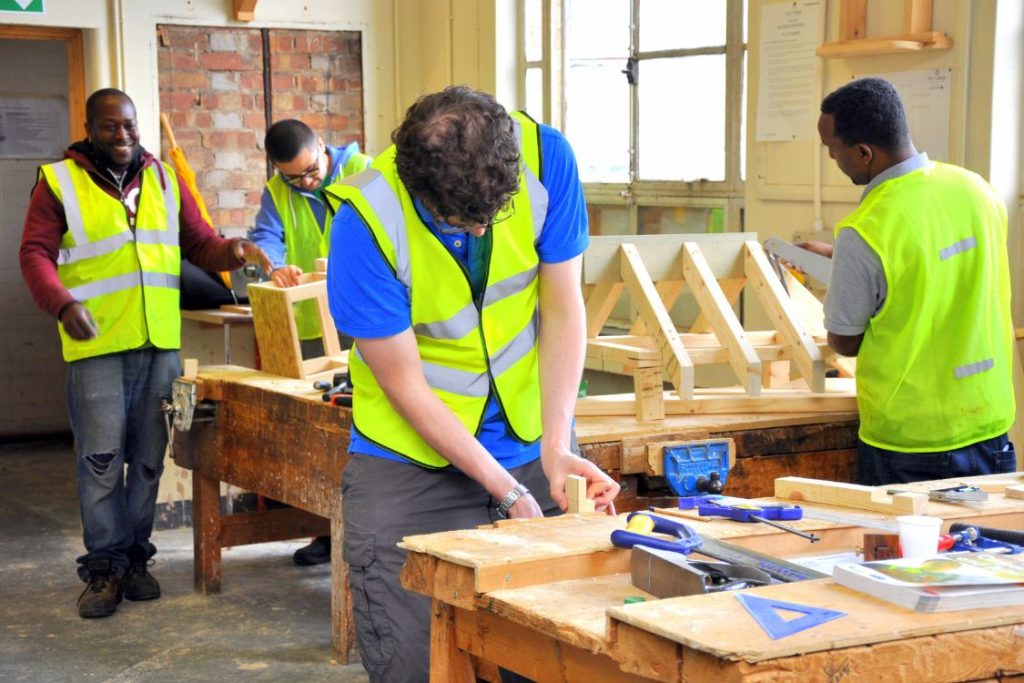
The Carpentry NVQ curriculum is meticulously designed to equip candidates with the necessary skills and knowledge to excel in the carpentry field. The structured approach encompasses both theoretical understanding and practical application, ensuring that students develop comprehensive expertise in carpentry. This dual focus prepares candidates for real-world challenges and enhances their employability within the construction industry.
Curriculum Specifics
The curriculum of the Carpentry NVQ is extensive, covering a wide range of subjects essential for becoming a proficient carpenter. Core areas include the understanding of construction drawings, materials, and health and safety regulations, which form the foundation of any construction project. Practical skills are a significant component of the program, focusing on essential carpentry tasks such as installing door and window frames, constructing floor joists, and assembling partitions.
Furthermore, students are trained in more advanced techniques like staircase installation and roof finishes, which are crucial for higher-level qualifications. These practical elements are designed to ensure that candidates can perform a variety of tasks efficiently and safely, meeting the industry standards. The curriculum aims to foster a deep understanding of both traditional and modern carpentry practices, encouraging adaptability and innovation in the workplace.
Assessment Criteria
The assessment process for Carpentry NVQ courses is comprehensive and rigorous, aimed at testing both theoretical understanding and practical competence. Candidates are required to gather evidence of their work, which includes detailed documentation and photographs of completed projects. This evidence is crucial for demonstrating their ability to apply theoretical knowledge in practical settings. Site visits are conducted by assessors to observe candidates in action, providing an opportunity for real-time evaluation of skills and adherence to safety protocols.
Professional discussions also form part of the assessment, allowing candidates to articulate their understanding and approach to various tasks. These discussions help to gauge a candidate’s depth of knowledge and problem-solving abilities. The assessment duration typically ranges from 1 to 3 months, with a fast-track option available for those who wish to complete the course more swiftly. This accelerated route benefits experienced individuals who can demonstrate competency in a shorter time frame, facilitating quicker entry into the workforce with a recognised qualification.
Career Paths and Potential Outcomes with a Carpentry NVQ
Obtaining a Carpentry NVQ opens up a multitude of career paths within the construction and woodworking industries. With this qualification, individuals can pursue roles in various fields, such as construction site carpentry, where they work on building frameworks and structures. Heritage restoration offers another avenue, allowing carpenters to engage in the preservation and repair of historical buildings, requiring a deep understanding of traditional methods and materials. Additionally, accomplished carpenters can take on specialised roles in prop making for theatre and film industries, where creativity and precision are paramount. For those interested in leadership, management positions in construction projects are attainable, where overseeing teams and ensuring project delivery align with industry standards becomes the focus.
| NVQ Level | Role | Estimated Salary |
|---|---|---|
| Level 2 | Skilled Worker | £22,000 – £30,000 |
| Level 3 | Advanced Craftsman | £30,000 – £40,000 |
| Level 4/5 | Site Manager | £40,000 – £60,000+ |
A career in carpentry offers not only financial stability but also a chance for personal satisfaction through creative expression. Experienced carpenters can earn upwards of £40,000 annually, with opportunities for further advancement and specialisation. The field allows individuals to cultivate a sense of pride in craftsmanship, as they see tangible results from their work. Carpentry also provides a versatile skill set that can adapt to various projects and innovative techniques, ensuring that professionals remain competitive and fulfilled in their careers.
Prerequisites and Foundational Qualifications for Carpentry NVQ

Prior experience plays a critical role in preparing for a Carpentry NVQ, particularly at Level 2. Such experience ensures that candidates have a foundational understanding of the trade, which is essential for tackling the practical demands of the course. Foundational qualifications, such as GCSEs in maths, English, and technology, provide a competitive edge. These subjects help build the analytical and problem-solving skills necessary for success in carpentry, enabling candidates to interpret plans and execute complex tasks effectively.
- Previous experience in carpentry or a related trade.
- GCSEs in maths, English, and technology.
- Basic understanding of construction principles.
Hands-on experience, often gained through apprenticeships, is invaluable for those pursuing a Carpentry NVQ. Apprenticeships offer the opportunity to learn directly from seasoned professionals while earning a wage. This real-world exposure allows individuals to hone their skills in a practical setting, reinforcing theoretical knowledge with practical application. Such experiences not only enhance technical proficiency but also instil confidence, preparing candidates for the challenges of professional carpentry.
Final Words
Carpentry NVQ qualifications serve as a cornerstone for building a solid foundation in the carpentry industry. Understanding the various levels provides clarity on the opportunities and skill development necessary for career advancement. From choosing the right training provider to engaging in comprehensive curriculum and assessments, each step is designed to equip aspiring carpenters with essential practical skills.
Achieving a Carpentry NVQ can lead to diverse career paths and salaries exceeding £40,000 annually. This qualification not only enhances professional capabilities but also opens doors to creative and rewarding opportunities within the construction and restoration sectors.

James focuses on global climate policies, advocating for sustainable solutions and environmental resilience.

